F-273, Solaris 1, Saki Vihar Road, Powai, Mumbai, MH - 400072
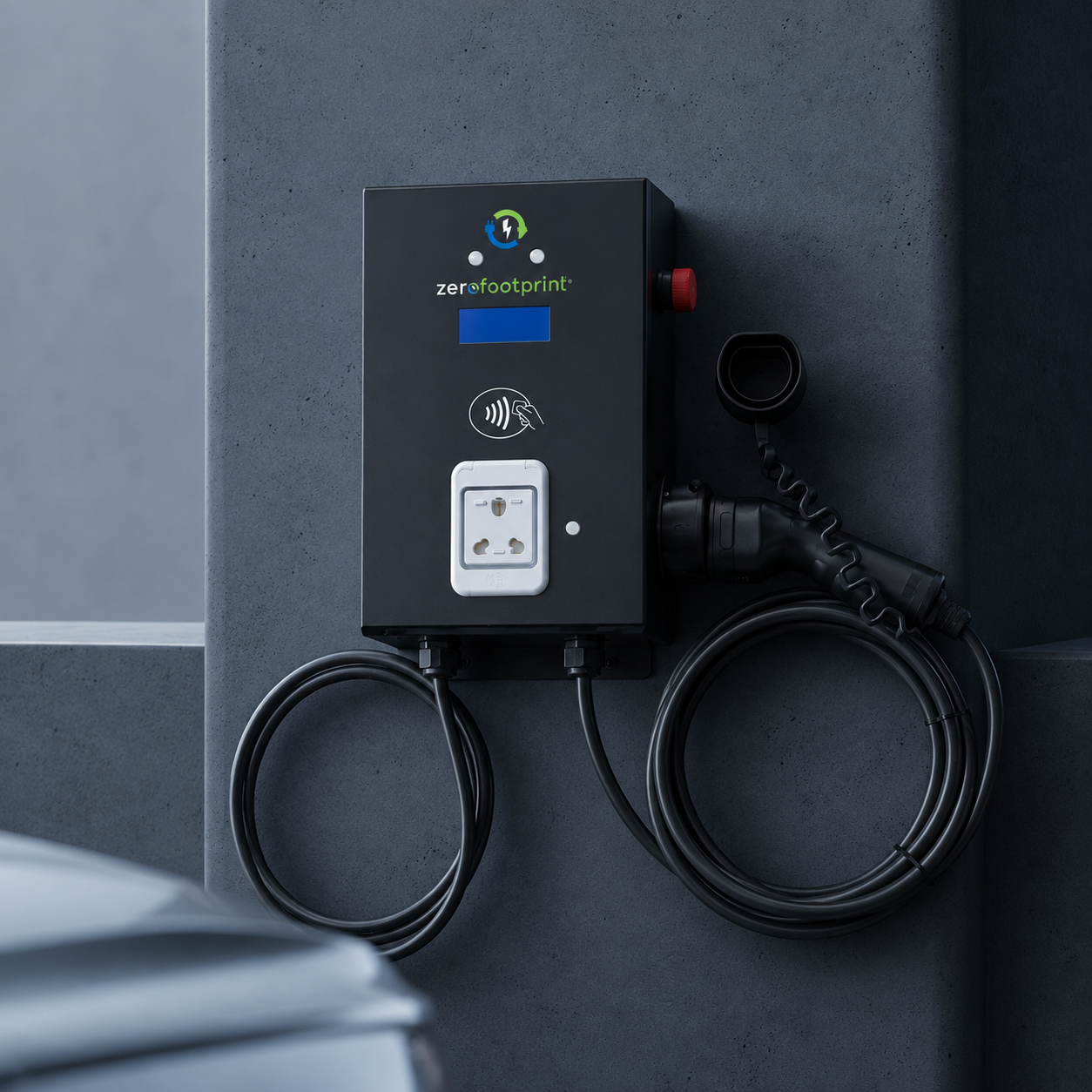
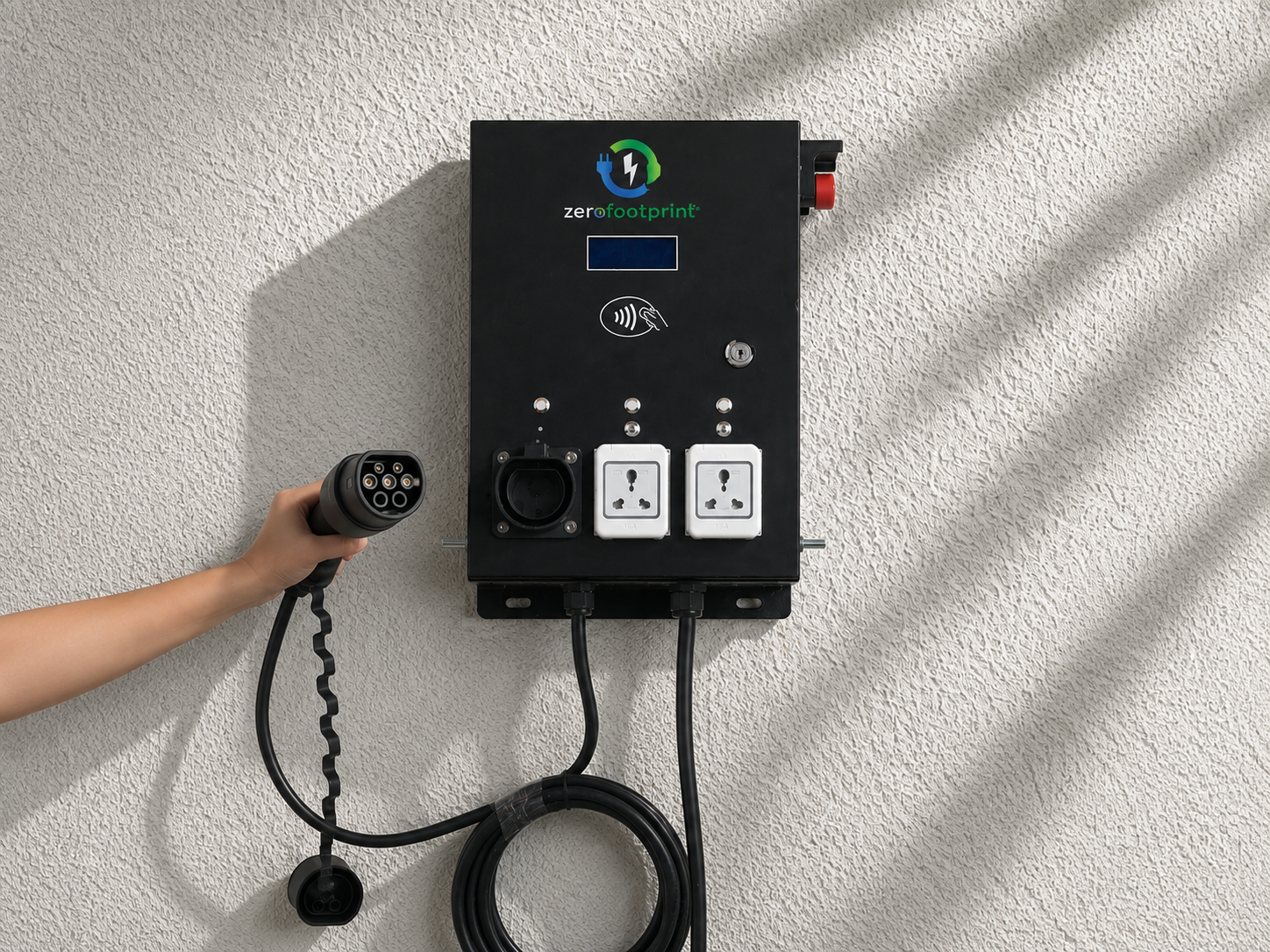
Serve different types of EVs with a single hybrid charging solution. ZeroFootprint AC Hybrid Chargers combine Type 2 AC charging for electric cars with dedicated 3.3 kW socket outputs for electric two-wheelers and utility charging, helping businesses support mixed-EV environments without adding unnecessary charging infrastructure.
Support multiple EV use cases with one intelligently designed charging footprint built for environments where both 2-wheelers and 4-wheelers need access to charging.
Enable convenient charging for residential developments, apartments and housing communities where residents may use both electric cars and electric two-wheelers.
Simplify charging infrastructure for offices, workplaces, commercial buildings and customer parking areas with a single hybrid charging solution.
Support customer and staff vehicles across different EV formats without requiring separate charging infrastructure for cars and two-wheelers.
Offer EV charging for hotels, resorts, malls, restaurants and other destinations where customers may arrive in different types of electric vehicles.
Charge electric cars through Type 2 AC charging while providing dedicated socket-based charging for electric two-wheelers and utility applications.
Combine multiple charging use cases into a single installation, helping operators make better use of available space and charging infrastructure.
Feature Comparison
Choose the charging speed that fits your needs and carry the must-have portable charger for backup through every EV journey.
Estimate how long your EV takes to reach target charge
If you start now, ready at
Estimate assumes constant charging power and ~90% charging efficiency. Real-world time varies with temperature, battery condition and charger/vehicle limits.
EV Insights
AC chargers rely on the vehicle's onboard charger to convert power, which limits their speed. CCS2 DC chargers convert power before it reaches the vehicle, bypassing that limitation and enabling much faster charging, from 15 kW up to 240 kW depending on the unit.
The 15/30 kW units suit sites with limited power infrastructure and lower daily throughput. The 60 kW variant is built for commercial and retail locations needing a faster, dual-gun option. The 120 to 240 kW range is designed for highway corridors and fleet depots that need to move multiple high-power vehicles through quickly.
A single-gun charger serves one vehicle at a time, while a dual-gun charger can serve two vehicles simultaneously, sharing total output, or sequentially, increasing the number of vehicles a station can charge per day.
[Answer content needed — not yet provided, add the real copy here.]
[Answer content needed — compatible EV brands/models for the CCS2 connector, add the real copy here.]
All variants connect via Wi-Fi, GSM or LAN and communicate over OCPP 1.6J, allowing remote monitoring of charging sessions, fault status and usage data through a connected platform.
Fill up the details for quick pricing estimates
Not every charging need is the same. The amount of power a site can supply, and the number of vehicles it needs to serve, should decide the charger, not the other way around. ZeroFootprint's CCS2 DC Chargers are built across a wide power band, from 15 kW compact units to 240 kW dual-gun stations, so the charger fits the site rather than forcing the site to fit the charger.
A single-gun DC charger for sites where a full high-power installation isn't practical, gated communities, smaller commercial lots or fleet points with lighter throughput needs. It still delivers meaningfully faster charging than AC, without demanding a heavy-duty power connection.
Positioned for commercial complexes and retail hubs, this dual-gun station is sized to give a visitor a real charge in the time they're already parked, without requiring highway-grade power infrastructure.
Scalable from a 120 kW single-gun setup to a full 240 kW dual-gun station, this variant is built for highway corridors and fleet depots, sites where the number of vehicles moved through per hour is the metric that matters.
Higher power output means higher stakes if something goes wrong, so protection scales with each variant. Every CCS2 charger in the range includes safeguards against over/under-voltage, over/under-current, ground faults, short-circuits, surge events and over-temperature conditions. The 60 kW unit adds an IK10 impact-resistant enclosure and forced fan cooling, while the 120 to 240 kW range carries a metal enclosure rated for outdoor use with a canopy.
Every variant uses the CCS2 connector, the standard now adopted across the majority of 4-wheeler and commercial EVs on Indian roads, so the same charging infrastructure works across a growing base of vehicles rather than locking a site into one brand or model.
All three variants connect over Wi-Fi, GSM or LAN and communicate through OCPP 1.6J, giving operators visibility into live sessions, fault alerts and usage data from a connected platform. Authentication is flexible across the range, RFID, QR code, Plug & Charge or a mobile app, so access can be managed per site, per user, or left open for public charging.
[Answer content needed — guidance on matching power variant to expected vehicle volume, dwell time and available electrical supply, add the real copy here.]
Subscribe to get the latest news on new EV charger launches, offers and industry updates from ZeroFootprint.
|
|
|