
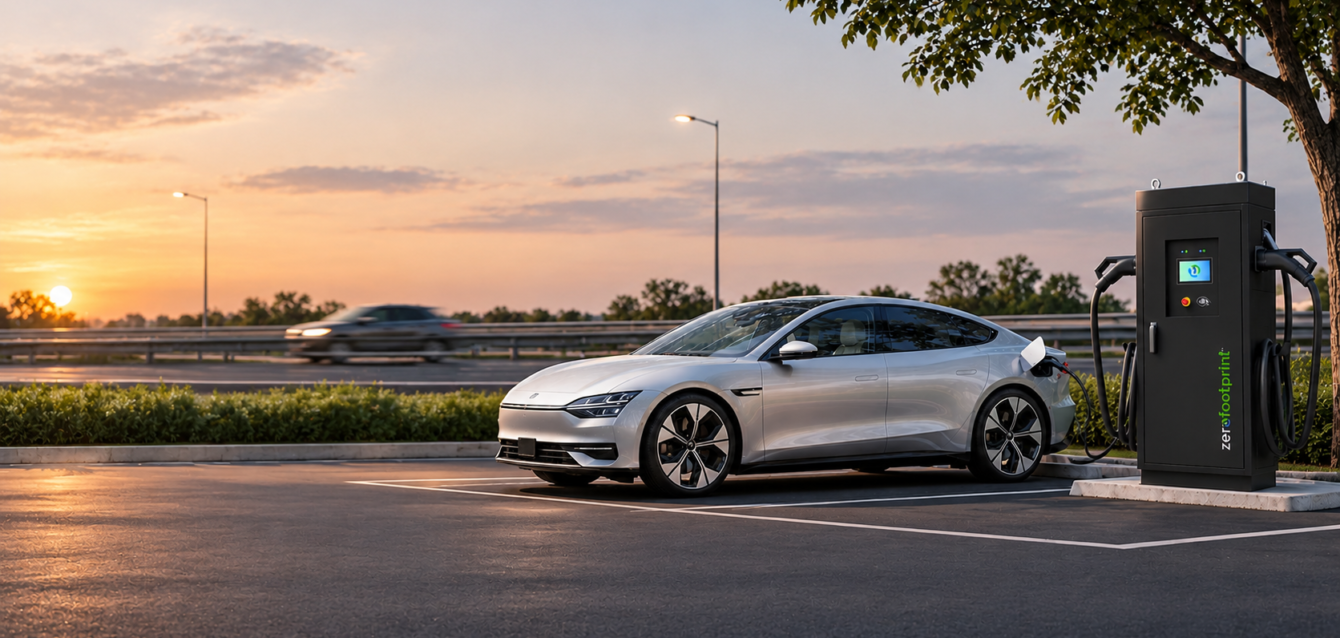
How Does an EV Charging Station Work?
An EV charging station is equipment that supplies electrical energy to an electric vehicle so its battery can be charged. While the basic purpose is straightforward, charging stations can differ significantly in their power output, charging technology, connectivity, installation requirements and intended application.
When an EV is connected, the charging system and vehicle communicate to manage the charging process. The amount of power delivered depends on factors including the charger’s output, the vehicle’s charging capability, the battery’s current state of charge and the electrical infrastructure available at the location. A charging station therefore works as part of a larger system involving the vehicle, charger, electrical connection and, in connected installations, charging management software.
What Are the Main Types of EV Chargers?
EV chargers are commonly discussed in terms of AC and DC charging. The difference is based on how electrical power is supplied to the vehicle and how the charging system handles conversion.
AC EV Charging
AC charging supplies alternating current to the vehicle, where the car’s onboard charger converts it into the direct current required by the battery. AC chargers are commonly used in places where vehicles remain parked for longer periods, including homes, workplaces, hotels, apartments and other destinations where charging can happen while the vehicle is stationary.
Because the vehicle is often parked for several hours in these environments, AC charging can be well suited to everyday charging routines. The appropriate AC charger depends on the vehicle, electrical capacity and the requirements of the installation.
DC Fast Charging
DC fast charging supplies direct current to the vehicle’s battery system, allowing higher charging power than many AC charging setups. It is commonly used in public charging locations, highways and fleet facilities where reducing charging time can be important.
ZeroFootprint’s CCS2 DC fast charging range is intended for applications that require higher-power charging. The appropriate power level still depends on the vehicle and the site’s electrical infrastructure, as well as how the charger will be used.
What Is a CCS2 Charger?
CCS2, or Combined Charging System Type 2, is a charging standard used widely for EV charging. A CCS2 connector combines the Type 2 AC interface with additional DC charging contacts, allowing compatible vehicles to use DC fast charging through the same combined connection.
CCS2 is particularly relevant to public and fast-charging infrastructure because it supports higher-power DC charging. However, the actual charging capability depends on the specific vehicle, charger and electrical system. A CCS2 connector does not by itself determine the charging speed of every vehicle.
How Long Does It Take to Charge an EV?
There is no single charging time that applies to every electric vehicle. Charging duration depends on the vehicle’s battery capacity, its current state of charge, the maximum charging power it can accept, the charger’s output and the conditions of the charging session.
AC charging is generally suited to longer parking periods because the vehicle can remain connected for several hours. DC fast charging is designed for situations where a shorter stop is required. In both cases, charging speed can vary during a session as the battery approaches a higher state of charge.
Where Are EV Charging Stations Used?
EV charging stations can be installed in a wide range of locations. The best charging solution depends on the amount of time vehicles remain parked, the number of vehicles being served and the charging requirements of the users.
Residential Locations
Home charging allows EV owners to charge where the vehicle is normally parked. It is commonly used for overnight or routine charging and can make daily EV use more convenient.
Offices and Workplaces
Workplace charging can allow employees or company vehicles to charge while parked during working hours. AC charging is often relevant where vehicles remain at the location for several hours.
Retail and Commercial Destinations
Malls, shopping centres, restaurants and commercial parking areas can use charging infrastructure to support visitors and customers while they are at the property. The required charging type depends on typical dwell time and expected usage.
Hotels and Hospitality
Hotels and hospitality properties can provide EV charging as part of their parking infrastructure. Longer guest stays can make AC charging suitable, while some locations may require faster charging depending on the property’s use case.
Highways and Public Charging Locations
Highway and public charging locations are designed for vehicles that need to charge away from home. DC fast charging can be relevant where drivers have shorter dwell times and need to continue their journey.
Fleet Facilities
Fleets have their own charging requirements because vehicles may follow defined operating schedules and return to a central location. Charging infrastructure can be planned around vehicle availability, turnaround time and fleet utilisation.
What Should You Consider When Choosing an EV Charger?
Selecting an EV charger should begin with the use case rather than the charger alone. The location, vehicle type, parking duration, electrical capacity and expected frequency of use all influence the appropriate solution.
Key considerations include:
Location and Parking Duration
Consider where the vehicle will be parked and how long it normally remains there. Longer dwell times can support AC charging, while shorter stops may require higher-power DC charging.
Vehicle Compatibility and Charging Requirements
The charger should be compatible with the vehicles that will use it. Connector type, maximum charging capability and vehicle charging behaviour all need to be considered.
Electrical Capacity and Installation
The site’s available electrical infrastructure can affect the power level that can be installed. Higher-power charging may require greater electrical capacity and appropriate site planning.
Usage and Future Expansion
Businesses and public charging operators should consider not only current demand but also how the charging network may need to grow. A solution that can be expanded or managed as usage increases can be useful for long-term infrastructure planning.
The Future of EV Charging
As EV adoption develops, charging infrastructure will need to become more accessible, reliable and suited to different patterns of mobility. Home charging can support everyday routines, while workplace, commercial, public and highway charging can provide access when vehicles are away from home.
The future of charging is therefore not about a single charger type. It is about creating a connected ecosystem in which different charging solutions work together to support different vehicles, locations and journeys.